On this first edition of Fiction Friday back you guys will have the pleasure of meeting the delightful Edie Cay, an amazing historical romance author I got to meet at the Historical Romance Retreat in San Diego so let’s get this show on the road, shall we?
1). Thank you for joining me today, let’s start easy with what got you into writing. E). I got into writing because of two things: the third grade and insomnia. My third grade teacher, Mrs. Canavan, would have us write short stories. At age nine, these were mostly one page affairs, which she would give us prompts to work with. I enjoyed these, though sometimes I misunderstood prompts and went a completely different direction than the rest of the class (I still struggle with this). My insomnia has been a lifelong affair, which I have passed on to my son. (I understand now, and Mom, I’m sorry.) When I was either in third or fourth grade, my parents gifted me my first journal, so I could record my thoughts on paper and be able to sleep. That also backfired, as I spent hours scribbling in journals all the way through adulthood. While it was rarely stories, I wrote about what I noticed, and what happened during the day. Thoughts I had about puberty, changing friends, and dreams I had. This all spurred a daily writing habit as well as practicing my descriptive skills. By high school, I was writing plays and poetry, and in college, I majored in creative writing.
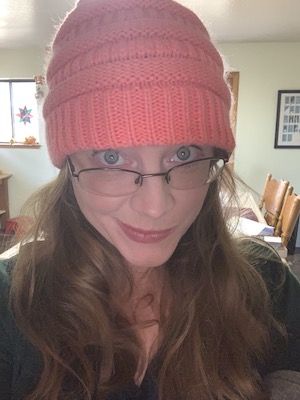
2). What do you love most about writing historical romance? And what do you find challenging about writing in this genre? E). What I love most about reading historical romance is how closely the narrative follows the emotional life of the characters. Literary fiction doesn’t necessarily go so in-depth, nor do the other genres—there’s no time! And honestly, I struggle with writing that. While I am very emotional on the inside, my cultural background (the Midwest, hat tip) instructed me to keep it bottled and smile politely. Sometimes it can be hard to uncork those feelings.
3). If you could go back in time to any point in history and live, where would you go and why? E). So this question is hard for me because I understand the spirit of it—romantic times of hair whipping in your face on the Highlands of Scotland, or the spray of salty sea air…but honestly, all I can think about is how many times I would have been dead already without modern medicine. I remember using my great-grandparents’ outhouse. In summer. No, thank you. My practical, super boring answer is NOW. I want to live NOW. I love electricity and computers and vaccines! I’m grateful for not having pox scars, birth control, wearing pants, getting an education, and texting friends who live across the oceans. (But legit, I think Ancient Rome would be fascinating. Plus running water and heated floors. Not all bad, right?)
4). I’ve read you’re a member of RWA, The Beau Monde, the Historical Novel Society, and a founding member of Paper Lantern Writers. Can you tell us a little about these organizations and your roles for them? E). I am a member of the Beau Monde, which is now the Regency Fiction Writers since they disaffiliated from the Romance Writers of America, a move I wholly supported. Regency Fiction Writers is the best resource for historical information, in my opinion. The members are incredibly knowledgeable, and for less than most organizations cost, they offer free classes monthly, as well as paid classes (also for a pittance). In addition, they pay their lecturers, which is important. It shows they value the work the lecturer has put into becoming an expert. I have given a monthly lecture and will speak at the conference in July about Prizefighting (and how women were involved, of course). The Historical Novel Society started in England, but the Americans were so enthusiastic that we now outnumber the UK team. The conferences are a blast, and I have had the pleasure of speaking at them in the past. What I do regularly is write reviews for their quarterly publications. Reviews can also be found online. No payment, but you get free books out of the deal! I also write articles when asked. It is definitely skewed more towards literary historical fiction as opposed to including all types, like historical romance, but I and a few others are out there talking about why historical romance is amazing. Paper Lantern Writers is an author marketing collective. What that means is that a group of us came together to help each other market our books. Our common thread is the historical aspect—while I write historical romance, others write historical mystery, biographical history, and heritage fiction. We decided to give it a go because as readers ourselves, we all enjoy more than one type of book. Don’t we want to help each other, since authors aren’t competitors but colleagues? We blog regularly, and I do live-streaming interviews monthly with some big-name authors on our YouTube channel.
5). As an author, each story is our baby so to speak, but I was wondering if any of your books so far hold a special place in your heart, If yes, which one and why? E). The Boxer and the Blacksmith is probably my favorite in the series. Bess Abbott is a truly remarkable character and one whose story I needed to tell. I wrote it as I became a first-time mother at the age of thirty-seven. I didn’t know how to be nurturing and soft, and I felt like I had a lifetime of sharp edges and hard surfaces. Bess Abbott’s taking on Violet is that journey of finding a new way to love: the consuming way a parent loves a child.
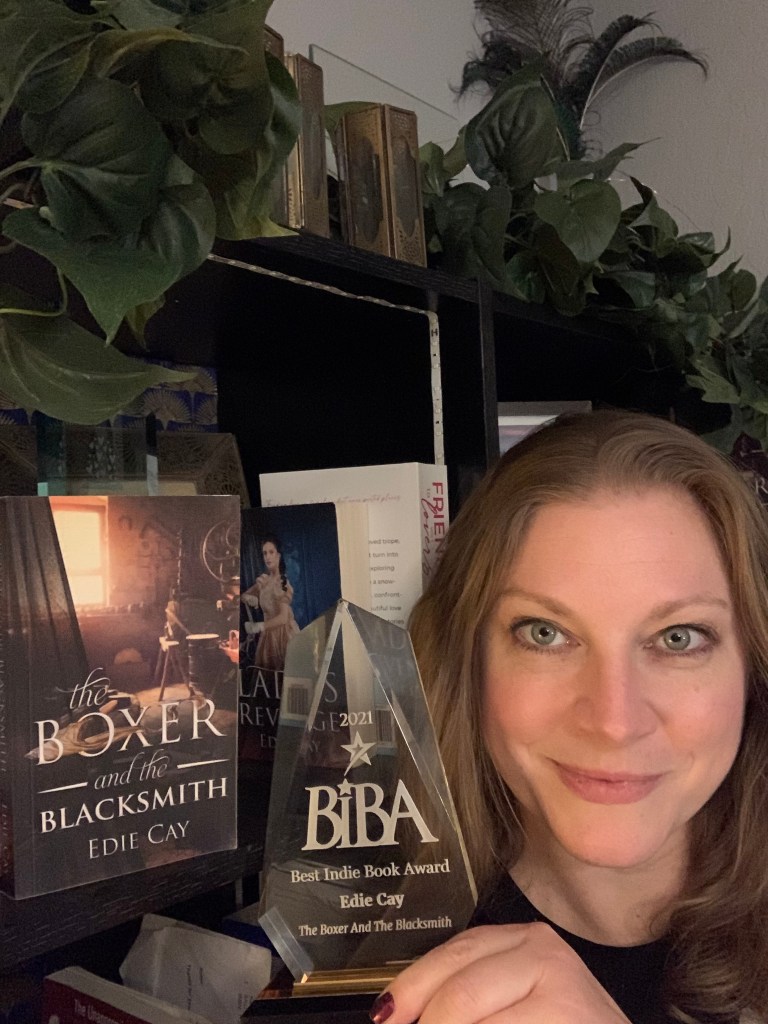
6). Now I love a strong female main character, in The Boxer and the Blacksmith, Bess Abbot is amazing. Is she based on an actual person? If yes, who? If no, who or what inspired her? E). Bess Abbott is based on a real person! She is based on Elizabeth Wilkinson Stokes, the best boxer of the 18th century. There are some differences—Stokes was small, whereas Bess is big. But I took one of Stokes’s biggest fights and based it on Bess’s central match against the Irish fighter (because in real life, she fought an Irish fighter). For the purposes of fiction, I showed how women could be either a serious athlete or be in the ring for “Foxy Boxing.” Bess is an athlete who has trained hard and is the best in her field, as was Elizabeth Wilkinson Stokes.
7). We met at HRR in San Diego, and being a first timer I was blown away by how cool all the events were, the costumes, and the connections I made. Do you attend many retreats like that one? What’s your favorite thing about these events? E). That was my first time at Historical Romance Retreat too! I’ve been to many conferences, but HRR was the most fun by far. It’s half cosplay, half conference. I learned things during the conferences, but it wasn’t high-pressure the way the Historical Novel Society conference is, where there is so much information you feel like your brain is going to explode and you’ll never make sense of all your notes. I’m not much for costumes, but I am going back to HRR this year!
8). Name a woman or women through history that you feel was underrated and deserved more recognition than she got. I love history so I’m looking forward to this answer and what I’ll learn. E). Well, the first person on my under-rated list is absolutely Elizabeth Wilkinson Stokes. She was a fighter, a trainer, and a businesswoman. She never lost a fight, and she worked hard to make sure everyone followed the rules—rules that would later become known as The Broughton Rules because another boxer, John Broughton, became famous and imposed them for his fights, though he never did with the regularity that Elizabeth did. In fact, they were about the same age, and while he gained the favor of the king’s son, Elizabeth disappears from history after the death of her husband, James Stokes, in 1734. I am dying to get over to London and dig around in some parish registries to see if I can figure out what happened to her. No one has found her yet.
9). If you could sit down and have a meal, interview, and converse with anyone in history, who would be sat at your table? Name your top 5. E). My table would include Leonardo Da Vinci, Artemisia Gentileschi, Anna Magdalena Bach, Heloise D’Argenteuil, and Anne Boleyn. Leonardo Da Vinci makes the list because he was a prolific polymath. I think he had ADHD, given that he slept at weird hours and was good at so many different things. His dinner conversation seems like it would be fast-paced. Artemisia Gentileschi, another Italian, she was painting at a time when women were discouraged from doing so, and she painted her women like real people: not these near-to-fainting goddesses, but rather Judith is sawing Holofenes’ head off, which is just plain hard work. Her experiences and willingness to buck trends make her a fascinating dinner companion. Anna Magadalena Bach is invited because as Johann Sebastian Bach’s second wife, she continued to work as a court musician after they were married. She was significantly younger, but extremely well-educated, and an excellent singer. She butted heads with Johann’s eldest son, C.P.E. (who did his best to ruin her life after his father died), but she worked, gave birth to thirteen children (!), and sacrificed everything to care for her adult daughter with Down’s syndrome. She was a woman who knew about sacrifice, and hard work, and frankly, deserved a night off. Heloise D’Argenteuil was a smarty-pants, same with Anne Boleyn. Both women seduced men (maybe on accident?), because of their big brains. Heloise was a very young woman when she met Abelard, but their romance (which ended in his castration and her being shut into a nunnery) was a romance of the minds. She later became an abbess, with a position equivalent to a bishop. As for Anne Boleyn, history does not show her in a favorable light, but people often fail to realize that she was devoted to the Protestant cause. King Henry VIII was educated to go into the clergy before his elder brother died and made him the next king, so Henry had an extremely in-depth understanding of church writings and philosophy. Anne smuggled Protestant tracts into England and they read and discussed them early on in their courtship. Again, this is all about how brains are the real sexy. And that also makes them excellent conversationalists.
10). Tell me three things about you that I might find surprising? E). I don’t know what is surprising anymore? But here are three unusual things about me: a. I was a hair model in high school. Just the back of my head. b. When I was in my twenties, I worked full-time as a pianist. I played the ballet and taught piano lessons. c. I have scuba dived in all five Great Lakes in less than 24 hours. You can watch a documentary about it on www.big5dive.com
11). What is the best piece of advice you’ve ever been given? And what is the worst piece of advice you’ve ever heard? E). The best advice I’ve ever been given: “When in Hell, just keep going.” It applies to driving through storms, it applies to rough patches in life. Just get through to the other side. The worst advice: “You only need a two hour layover at the Charles De Gaulle airport.” It’s the worst airport in the world. A transfer there takes daaaaaaays. Avoid!
12). What is something as a writer that you know now that you’d wished you’d known starting out? E). I wish I’d realized that the market for historical romance is Romance readers, not historical fiction readers. There is still a big prejudice against romance books in the world, and when I try to market my books to historical fiction readers, I encounter resistance. Sometimes those blushes and stammers say, “Oh, but not like that smut stuff, right?” Yes. I DO mean smut stuff. Yes. Get off the high horse. You can have sex scenes and depth of character and a real plot all at the same time. If you’re doing it right, that smut is part of character growth and is indispensable to the narrative.
13). Do you have any words of wisdom for anyone wanting to write their own story? E). Words of wisdom is hard, but I will say this: Make a product you are proud of, the very first time. Even if you pay more for a cover than conventional wisdom recommends. Or you get more rounds of edits than other authors because you are unsure. I lose sleep for the weeks leading up to each new release. But what lets me sleep after is knowing that the overall product is the best book I could possibly make.
14). What’s next for you? E). So many things! I have two short stories coming out this fall/winter. Both are connected to my boxing world. I’m also writing Book 5 in The Blood Is Up series, which is the final installment. And I have designs on a brand new series as well!
Thank you so much, Edie, for joining us today, I look forward to reading your new stories and to seeing you again at future events. Anyone looking to follow Edie or read some of awesome work here are all the deets on where to find it.
Blog: www.paperlanternwriters.com/blog
instagram: www.instagram.com/authorEdieCay
Facebook: www.instagram.com/authorEdieCay
newsletter sign-up: https://dashboard.mailerlite.com/forms/331417/82198284124292936/share
Book links for When the Blood Is Up series:
1. A Lady’s Revenge https://books2read.com/u/38EojZ
2. The Boxer and the Blacksmith https://books2read.com/u/3JXDEJ
3. A Lady’s Finder https://books2read.com/u/brwX0e
4. A Viscount’s Revenge https://books2read.com/u/49LOY0
The Grand Mistletoe Assembly, a historical romance anthology with my story, “The Footman’s Mistake,” set in the same world as the When the Blood is Up book series available for pre-order: https://buy.bookfunnel.com/zk90pzt05b
Other fiction:
In Her Element, a contemporary romance novelette, available on Kindle Unlimited https://amzn.to/3HeOpJ4
Till next week I hope you get lost in a good book and an adventure that moves your soul.
Love, a whimsical Magnolia xx

 Rustic Magnolia